

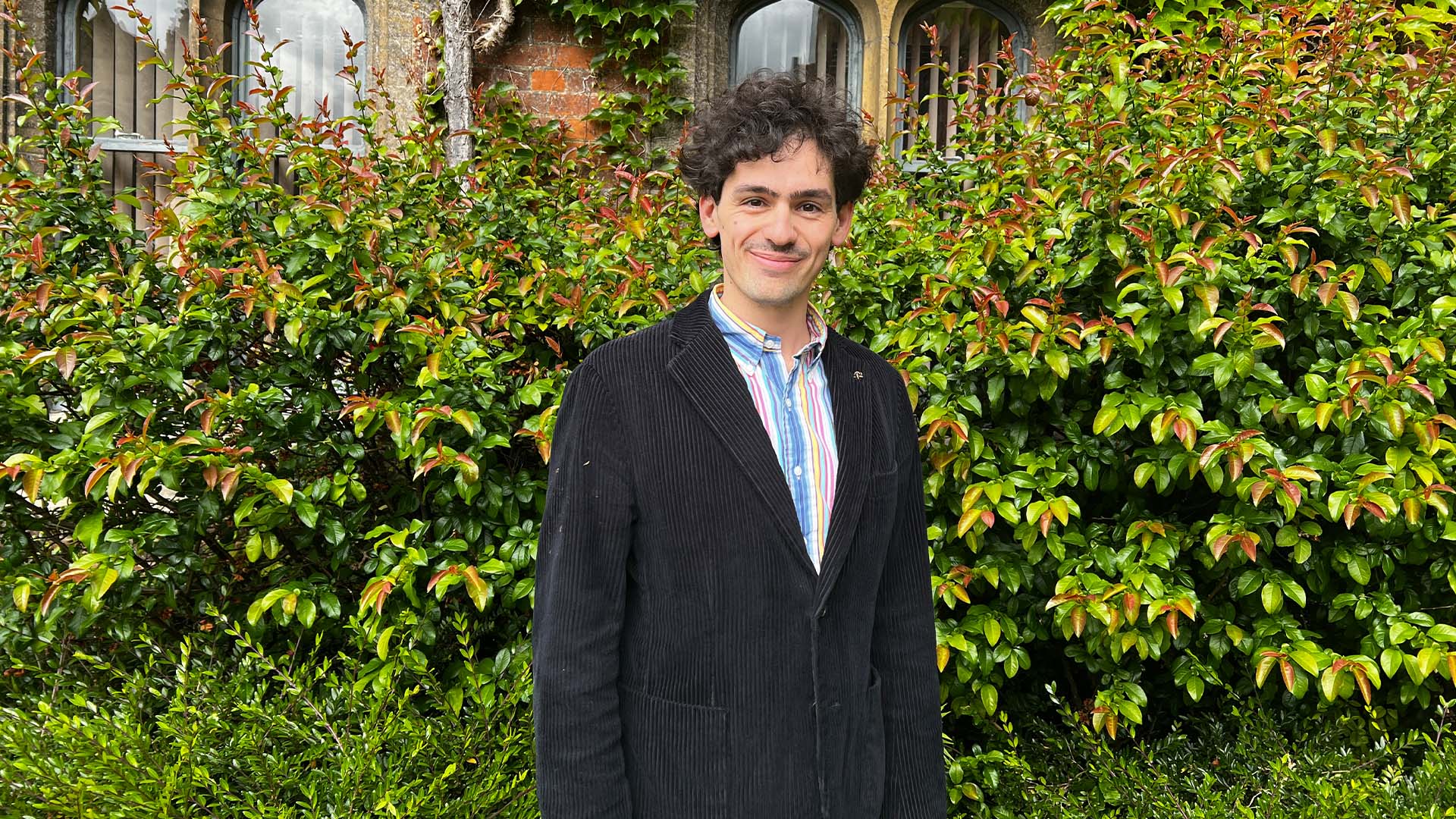
Dr Leo Impett (Associate Professor in Digital Humanities, Bye-Fellow)
Can you tell us about your work?
I work in digital humanities, a field that combines computational methods with the humanities. It has long been shaped by two approaches. One uses computers to explore humanities questions by building large datasets and analysing them at a scale that wouldn’t be possible by hand. The other takes a more critical perspective, examining the cultural assumptions and values embedded in technologies such as AI. I’m particularly interested in visual culture, how machines see images, how they generate them, and what ideas about style, beauty, gender or culture get baked into those systems.
How did you end up working at the intersection of AI and art history?
I studied engineering at Cambridge and, during a summer internship at Microsoft Research in Cairo, I worked on an algorithm designed to identify which photos were ‘prettiest’. At a basic level that’s unproblematic, filtering out blurry images and accidental photos. However, as the algorithms get better, it starts to get dodgy. What counts as ‘pretty’ becomes culturally loaded, shaped by the tastes of tech workers and amateur photographers whose images the machines are trained on. That was one of the first moments when I really started thinking about the cultural politics of AI and images.
Why do you use computational methods to look at art?
Machines see differently from us. You can programme a machine to ignore things that humans naturally focus on. I once worked on a project where we removed the sitters from thousands of portraits and just looked at the backgrounds. Normally, when you look at a portrait, you think about the person, who they are, how they’re dressed, their expression. So, if the aim is to understand how background colours changed across Europe over two centuries, AI’s more alien form of attention can be useful.
Why should art history have anything to say about AI?
People working on language-based AI have always talked to linguists and literary scholars but computer vision developed with almost no serious theory of images behind it. In the UK we sometimes think of art history as something niche, just about old or elite art. But it’s really about how images work, historically and culturally. As AI systems start behaving more and more like humans, you need the humanities to understand them.
What does a good day at work look like for you?
The best days are when you see something collective emerging. When I arrived in Cambridge, I had one PhD student and now there’s a group of around fourteen people across Cambridge and Rome. There are days when that’s stressful, but there are also days when you see ideas clicking and a school of thought developing. I really enjoy those days, and fortunately they happen quite often.
What brought you to Selwyn?
There were a few things that drew me to Selwyn. One was its longstanding strength in digital humanities. I think that partly comes from its close links with the University Library, which has traditionally been a centre for this kind of work. Selwyn felt like a place where that work was not only understood but genuinely supported. It was also about atmosphere. I’d had a sense of Cambridge colleges for a long time, having grown up around the University and later studying here myself, and Selwyn simply felt right. It seemed relaxed, friendly and collegiate.