
In July 2025, Biological Anthropology and Archaeology student Grace Grandfield (SE 2023) was part of the team that uncovered a ninth-century mass grave. The discovery is believed to date from a frontier skirmish between the Saxon kingdom of Mercia and Viking-conquered East Anglia. It is the most significant find at Wandlebury Country Park since 1976 and features in the BBC series Digging for Britain.
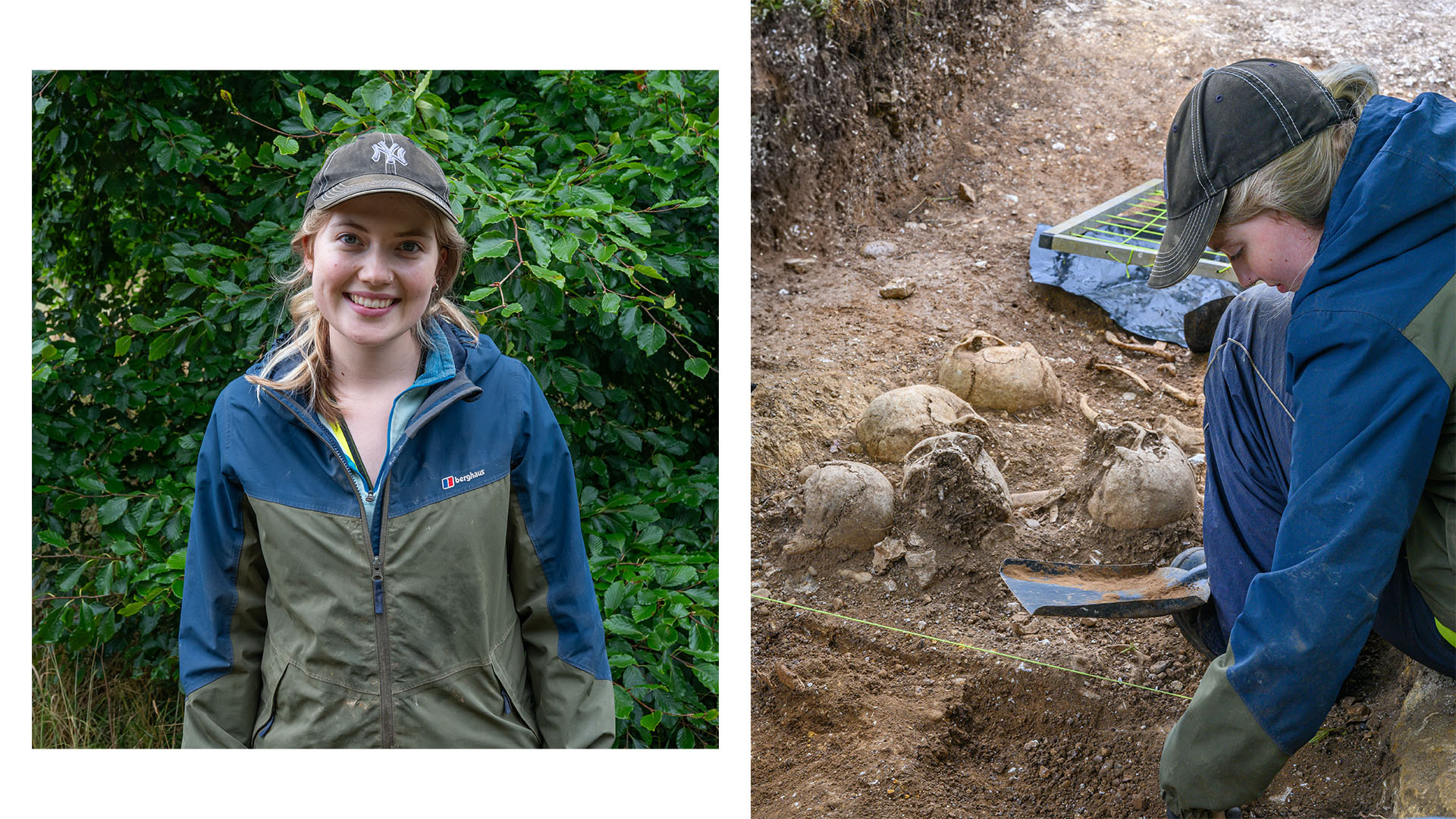
The question I am asked most often about my subject is: what is the best thing you have ever found? For the first two and a half years my answer was nothing. Completely by luck, now I can say I was part of the most significant archaeological find in Britain in a decade and somehow ended up on Digging for Britain, the Today programme and CNN. I really did not mean for that to happen, but it was exciting.
As part of the course, we carry out fieldwork to understand how archaeology works in practice: how to excavate correctly, how to read a site and how to extract information from the ground without losing it. I chose a four-week placement with the Cambridge Archaeological Unit (CAU) as I had done a couple of weeks with them in my first year and I find how they work interesting.
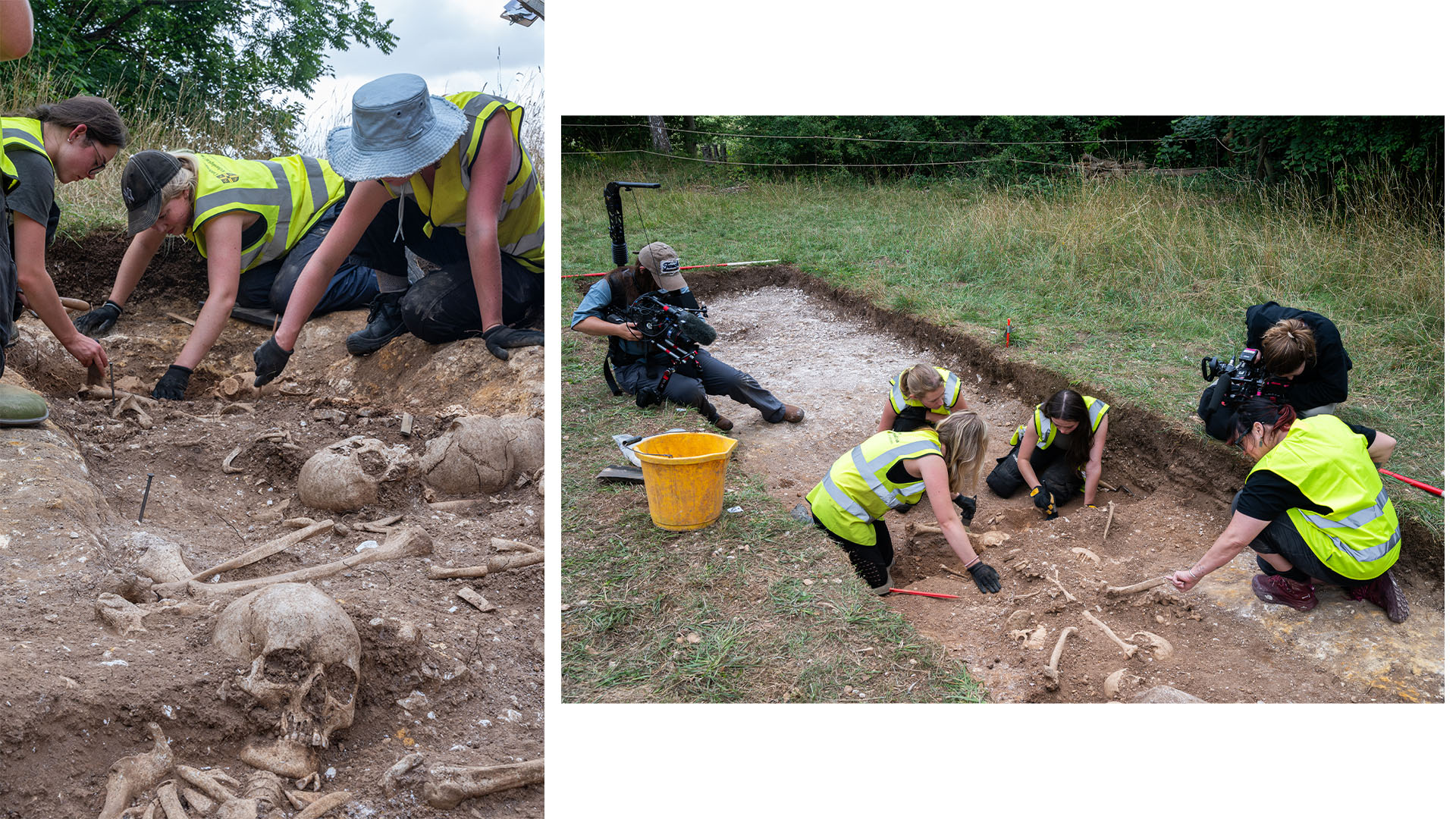
The first three weeks were uneventful. They were long days working carefully in a small pit with three other students and two CAU professionals. In week four, the dig leader, Dr Oscar Aldred, suggested we move to a site where an individual’s remains had been found previously. We started taking off the topsoil and found a few fragments of bone. We kept going and found more, so we switched to smaller tools. And then there was a skull. And then another skull underneath it. And then a femur that did not seem to belong to either of them. As we worked further down it became clear this was far more complex than anyone had anticipated. We were expecting one individual. There were, in fact, ten.
When I first uncovered a cranium, I did not immediately know what I was looking at. I had never handled human remains before. At first glance it looked a bit like the top of an egg. As I carefully worked around it, I realised what it was. I remember thinking that this was a person. It was quite a shock.
WHAT IS WANDLEBURY HILLFORT?
Wandlebury Country Park is an Iron Age hillfort and popular visitor destination three miles south of Cambridge, owned by local charity Cambridge Past, Present & Future.
The University’s Department of Archaeology and the CAU have conducted student training digs on the site for several years. Among the remains was a man of around 6 foot 5 inches who had survived trepanning (main image). Trepanation is an ancient surgical procedure in which a hole is bored through a living person’s skull, used to treat conditions including migraines and seizures.
All the remains, including the skull, dating to around 870 AD, are now held at the Duckworth Collection, University of Cambridge, where further analysis is ongoing
Everything was very compacted in the grave. You would be trying to work out the relationship between what you were finding and where it lay. People working on different sides of the pit were telling everyone what they were finding all the time. Every piece of information added to the picture of what might have happened.
What we uncovered was a mix of remains, some skeletons were intact and some were body parts clustered together. There were skulls in one area, arms and long bones in others. Among them, face down in the pit, were the remains of a man aged between 17 and 24 who would have stood around six foot five when the average male height was around five foot six. The bones were big. A member of the public walking past as we were taking one off site thought it was a cow bone because it was so large.
The university osteologist, Dr Trish Biers, came and looked at what I was finding as I was uncovering it. She was examining the ends of the bones to see how they fuse, which lets you estimate age. She told me that the individuals were probably between 16 and 21. Somehow that made them seem more human.
All of them appear to have been relatively young men, flung into the pit without care. The working theory is that this was the aftermath of a skirmish, a battle, or possibly a mass execution. When the professionals started saying this was the biggest find in British archaeology in the last ten years, my main feeling was: should I really be here? I was by far the least experienced person on that site and it was genuinely exciting.
I will definitely keep digging and I will follow what happens with this find. I am also just very pleased that other people find it as interesting as I do. That feeling of having made a contribution, however unexpectedly, is what it is all about.