


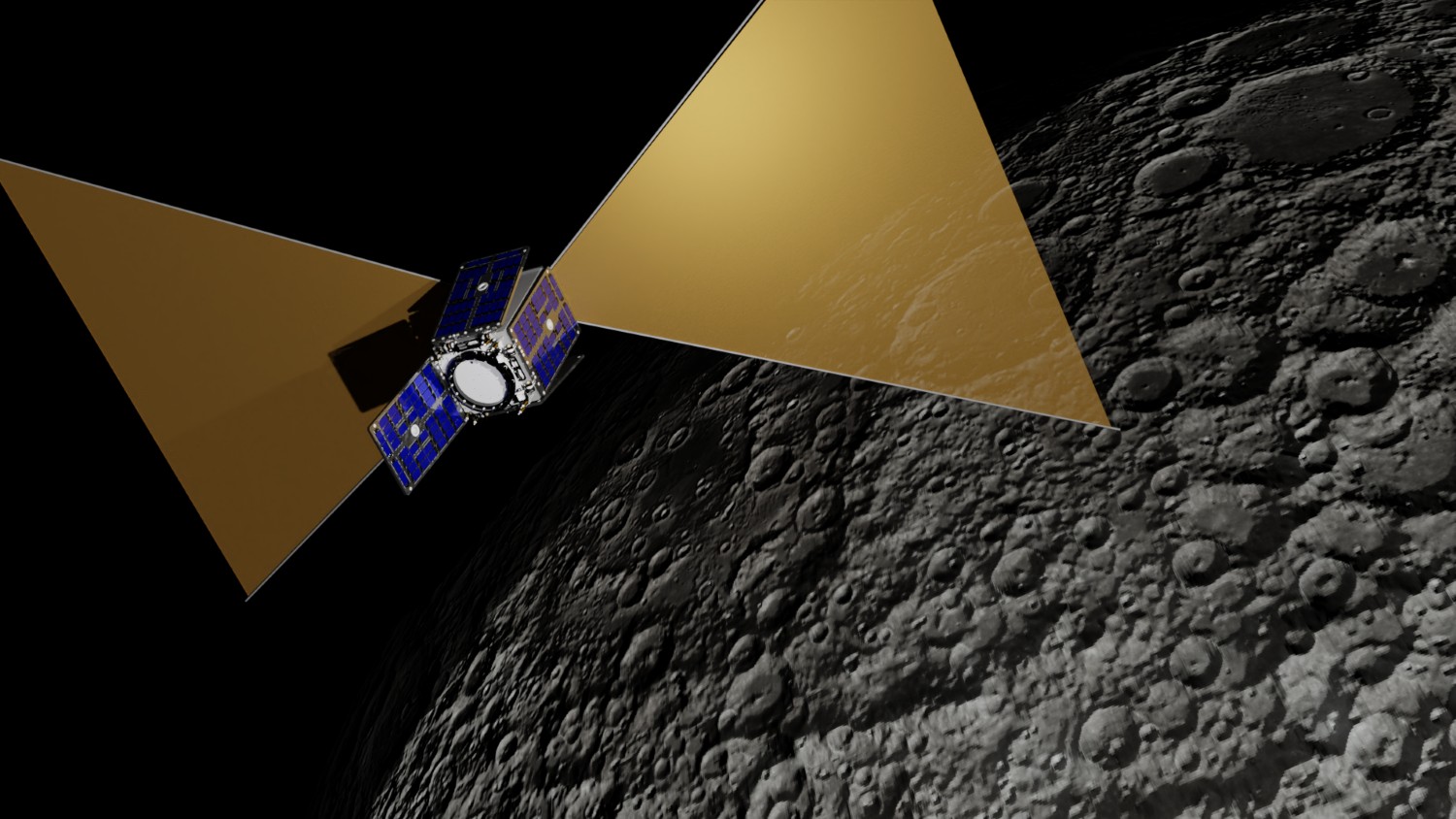
There is a chapter of the Universe’s early history of approximately 150 million years that humanity has never directly observed. A Cambridge-led mission now plans to open a window onto it. The mission, called CosmoCube, is outlined in the recent edition of Nature Astronomy by a team of scientists led by Selwyn Fellow Professor Eloy de Lera Acedo.

CosmoCube, about the size of a small suitcase, will orbit the Moon and use its far side as a shield from Earth's noise. The team is working to a four to five year roadmap, with the goal of reaching lunar orbit before the end of the decade.
CosmoCube will target the cosmic Dark Ages, when the universe was filled largely with neutral hydrogen but the first stars had yet to illuminate the cosmos. The extremely weak radio signature from that hydrogen is exceptionally difficult to detect from Earth because of our ionosphere, human-made radio interference and much brighter astrophysical foregrounds.
"The Universe was dark before it had stars, but it was not without a story. That story is written in hydrogen, carrying the fingerprints of gravity, dark matter and the birth of cosmic structure. CosmoCube could allow us to read those first pages for the very first time," said Eloy.
CosmoCube has UK Space Agency funding, with the satellite being built in the UK by Surrey Space Technology Limited alongside academic and industry partners.
Find out more at cosmocube.net or read the press release here.