Key facts
- Typical offer conditions - A*AA - A*A*A at A-Level / IB 42-43 with 776 in Higher Levels
- Required subjects - none
- Admissions tests - none
- Interviews - one subject based
- Written work - none
- Average offers made - 1
The subject at Selwyn
As a small subject, History of Art is organised very largely at a Departmental level, with lectures, seminars and supervisions, the kernel of Cambridge’s teaching, in every case organised centrally. The Department aims to have about 2-30 students in total each year; admitted across a good spread of different Colleges. History of Art is in this sense one of the most integrated subjects in the University with students at different Colleges having the same academic experience, and often sharing the same Director of Studies.
College support is still important, offering a warm and vibrant environment and a stimulating interdisciplinary experience, and library provision particularly so. The College Library holds over 40,000 books, including those most relevant to this subject, and stock is continually updated. The Library also provides a pleasant study area. Selwyn has a record of success in the History of Art course and provides strong support for students.
The Teaching Fellow
The Director of Studies for the History of Art course for Selwyn College is Dr Barry Phipps. He specialises in modern and contemporary art in relation to the sciences. He is Curator of Art and Science at the Isaac Newton Institute of Mathematical Sciences, University of Cambridge, Director of Visual Art at the Møller Institute, as well as Curator of Works of Art and Keeper of the Plate at Churchill College.
Subject requirements
Although the subject does not ask for specific A-Level subjects, we would prefer if all applicants have at least one essay writing subject in their profile. It is useful (but not essential) for applicants to have studied one or more from History, History of Art, English (language or literature) and a language.
Beyond that we look for verbal and visual clarity: the abilities to recognise, analyse, and appreciate works of art and to put forward a reasoned case on paper and orally.
Interviews
There will be an interview with the Director of Studies at Selwyn, who will usually be accompanied by another specialist member of staff. This interview will include a visual analysis test, where applicants will be presented with a couple of images of works of art or architecture, and asked to comment on these. There will also be a textuall analysis exercise.
You can also expect to be questioned about your interest in the subject, motivation, knowledge gained so far, and about your strengths and suitability to the very high standards we expect in Cambridge.
We asked our former Director of Studies, Dr Anna Gannon, a few questions...
Can you tell us a bit about your Tripos?
First of all, a bit of boasting... History of Art at Cambridge has once again come top in the Complete University Guide.
Our Tripos is very broad, and covers topics ranging from medieval to modern and contemporary art, including painting, architecture, sculpture and visual art in the broadest sense, as well as Global art. We also offer a solid theoretical basis to underpin your studies. Our students really benefit from many opportunity and 'behind the scenes' experience of places like the Fitzwilliam Museum, Kettle's Yard, the Hamilton Kerr Institute for Conservation, the University Library, archives and Colleges' Collections - as well as visits to London, Ely, and other places of interest nearby, and revision trips abroad.
How is your Tripos taught?
The Department has uploaded a really useful film, which will tells you all you need to know about how we teach and what we do; it also features one of Selwyn students!
In addition, it is useful to know that much emphasis is put on how to do your own research: our students produce two dissertations on topics of their choice (in their first and in their third year), and these are always interesting high points of their learning at Cambridge, and useful when moving on to further studies.
Is there anything else you'd like to add about your Tripos at Selwyn?
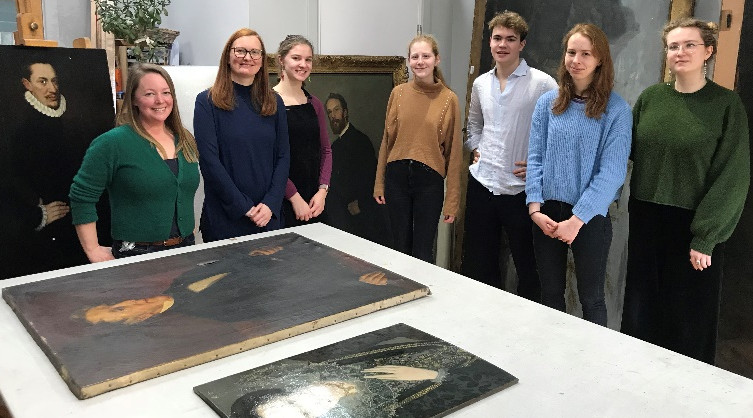
Selwyn has a very good tradition of Art History students, who have all done very well academically and beyond. Ours is a small subject, and typically we have one student a year - however, because of the way Colleges work, this does not mean to say they are isolated: on the contrary, they tend to be a lively bunch and be involved in all sorts of extra-curriculum activities. Last year our Selwyn students went to see the restoration process of one of the College paintings, and to speak to the conservator.
The College Library is excellent, and the College very generous in supporting travels for academic purposes.
As in all Colleges, students are supported by a Director of Studies, who looks after the academic trajectory and supports the learning and development of each student.
March 2026