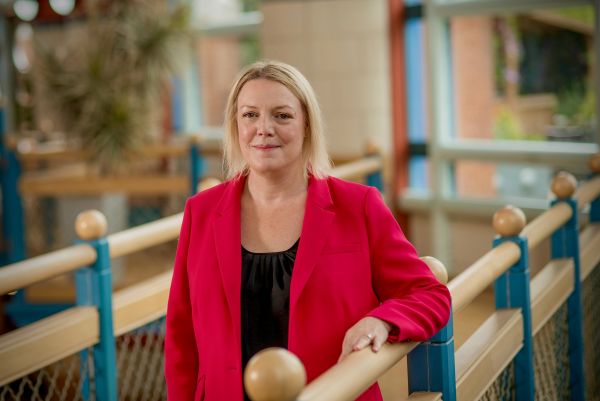

Research co-led by Selwyn Fellow, Professor Charlotte Summers, has found that a mental rotation treatment that involves playing Tetris can significantly reduce intrusive memories, often called flashbacks, in healthcare workers traumatised during the Covid-19 pandemic.
Charlotte, an intensive care doctor, worked with clinical psychologist Professor Emily Holmes on a randomised controlled trial involving 99 NHS staff. Participants who used a short Tetris-based intervention had ten times fewer flashbacks than those receiving standard care or a placebo. After six months, 70 per cent were completely free of intrusive memories.
The intervention works by asking participants to briefly recall a traumatic memory, then play Tetris — the visual demands of the game create interference that disrupts how the memory is stored in the brain.
The research, published in The Lancet Psychiatry, has been described by Wellcome's Digital Mental Health Innovation Lead, Tayla McCloud, as "accessible, scalable and adaptable across contexts."
The Wellcome Trust has featured the findings on their website.