

How do you convey an entire thesis in just three minutes?
That was the question facing students who took part in Selwyn’s annual Three Minute Thesis competition.
With such a limited time to present complex ideas and just one static slide, the event was an exercise in identifying the most essential information that would both inform and, most importantly, engage the panel of judges.
Entrants covered a range of thought-provoking topics on the evenings of 18 and 19 March, such as how AI is creating a challenging new environment for humans, leeches thriving in deforested areas, finding that groups of prime numbers are less likely to exclude individuals. Even linking classics to Swedish heavy metal and covering the Passion of Port Talbot re-enactment. They also explored the underlying mechanisms that shape intrusive memories in post-traumatic stress disorder, and how concepts drawn from general relativity might offer new approaches to diagnosing dementia. Another presentation examined the reception of Ulysses through the interpretive framework of The Divine Comedy.
Open to all Selwyn students, the process of preparing and presenting to an audience, helps to refine their ideas, sharpen their arguments, and develop the clarity and confidence needed to communicate their work effectively to an audience who will not all be specialists.
Master Suzanne Raine said: "It has been wonderful to see the quality, engagement and intellectual heft of our three-minute presenters. Being able to articulate clearly and succinctly research aims, method and conclusions is a key skill and this competition has been a fantastic way for our students to develop and demonstrate it."
Participants were enthusiastic about the process saying it was useful in honing their thinking, even though it was tough distilling their work into just one slide.
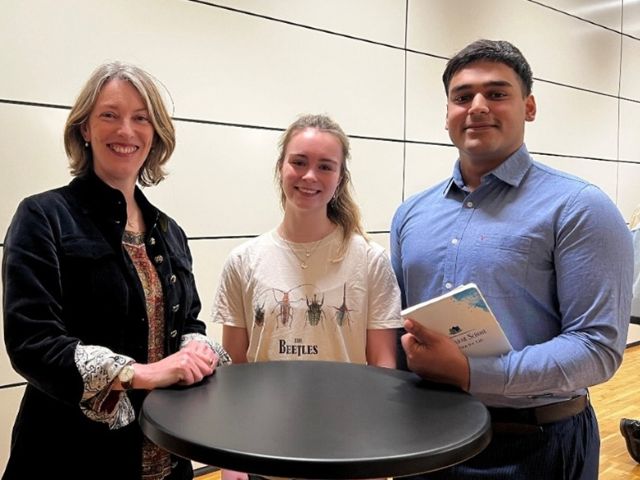
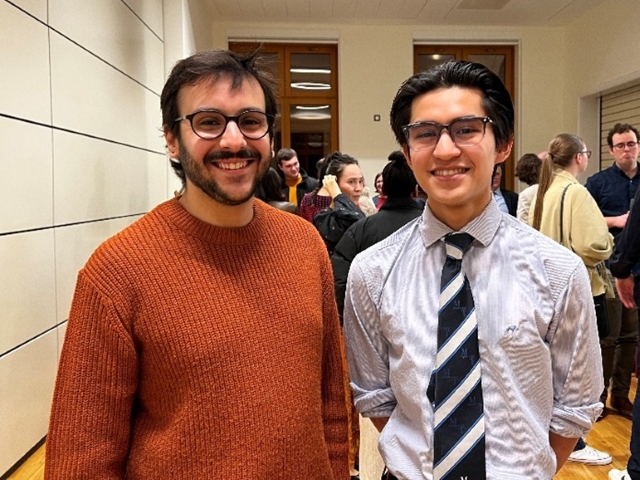
Congratulations to the prize winners:
- Alex Barrington (SE 2023) Zoology
- Aryan Misra (SE 2023) Psychological and Behavioural Sciences
- Affan Dziyaul (SE 2025) Land Economy
- Raphael Hernandes (SE 2025) Digital Humanities
|
|